Why Access to IT Can Be a Luxury for Small Businesses
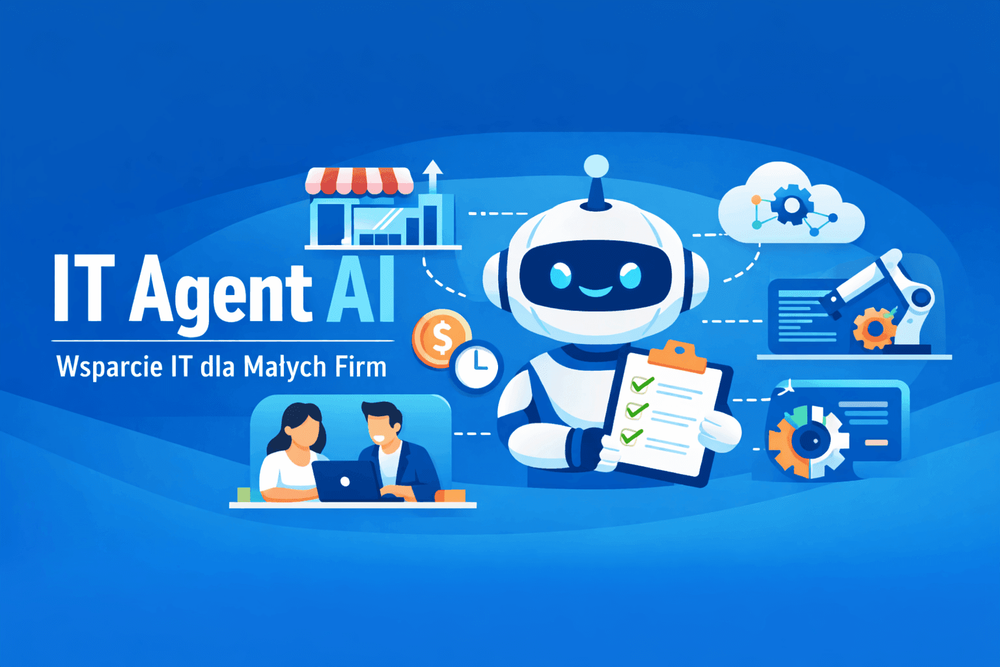
source: own elaboration
In theory, digital tools should level the playing field: lowering coordination costs, shortening service delivery times, and making it easier to enter new markets. In practice, small and medium-sized enterprises (SMEs) often operate in the financial and skills-based “shadow” of larger players. The difference is not only about budgets, but also about tolerance for implementation risk: when a business has one accountant, one warehouse, and one store, an integration or migration error hurts differently than in a corporation with process buffers and dedicated support teams.
Organisation for Economic Co-operation and Development (OECD) reports consistently indicate that the barriers to digitalization in SMEs are structural: information and skills gaps, limited capital, high upfront costs (so-called sunk costs), weaker managerial practices around technology, as well as legal uncertainty and the burden of data protection and security requirements.
The latter is not a mere “box-ticking” formality. As digitalization accelerates, pressure for cyber resilience increases. European Union Agency for Cybersecurity (ENISA), in its analyses, describes the growing scale and intensity of threats, demonstrating a link between the rapid pace of digitalization and the expanding attack landscape. As a result, a small business faces a classic dilemma: technology is necessary, but entering into it can be costly, risky, and time-consuming — while “doing nothing” also comes at a price.
What Is an IT AI Agent — and Why It’s More Than a Chatbot
In everyday language, “AI in business” is often reduced to a chat interface that answers questions. Meanwhile, the trend that in 2025–2026 is moving most decisively from labs into real-world implementation is agentic systems: solutions that not only generate content, but can plan work, use tools, and perform tasks within digital environments.
Across technology providers’ definitions, several elements recur:
- an agent has a goal (or a set of goals),
- it can plan steps,
- it uses tools (APIs, repositories, databases, admin panels),
- it takes action with minimal human intervention — though not without oversight.
For example, IBM describes “agentic workflows” as processes in which autonomous agents make decisions, carry out actions, and coordinate tasks with limited human intervention. Google Cloud defines AI agents as systems that pursue goals on behalf of users, incorporating reasoning, planning, and memory. Amazon Web Services, in turn, emphasizes “agentic AI” as a setup capable of acting autonomously toward predefined objectives.
At the same time, healthy skepticism is emerging: “agentic” is also a fashionable marketing term, and the line between automation, assistant, and agent is often blurred. It is therefore useful to adopt a working, practical definition: an IT AI agent is a model for delivering IT capabilities in which analytical and execution tasks (from documentation, through code and testing, to integrations and automation) are carried out by AI agents and humans supervising their work — with the emphasis on business outcomes, not merely the “presence of AI.” ** Where the Cost Reduction Comes From: Production Productivity and “Agenticity”**
The economic promise of AI agents is based not only on “smarter answers,” but on a shift in the cost function of cognitive labor. Two phenomena overlap here.
The first is the rapid adoption of generative AI in office and technical work. Research from National Bureau of Economic Research (NBER) indicates that generative AI adoption is progressing at a pace comparable to the early adoption of personal computers, with respondents reporting aggregated time savings.
The second is the growing, measurable productivity in software development and technical content creation when supported by AI. In a controlled study described by GitHub, a team using a code assistant achieved a higher task completion rate than the control group. Field experiments and productivity analyses (including in programming contexts) often show reduced task completion times and improved quality, although results vary significantly depending on the type of work and participants’ experience.
An honest assessment must include a third element: the effect is not guaranteed. There are situations in which AI tools slow down experienced developers — for example, due to the cost of verifying and correcting suggestions in well-known codebases. This does not invalidate the broader trend, but it suggests that a real advantage emerges only when AI is embedded in the process (testing, review, deployment, monitoring), rather than used as a “side code generator.”
This brings us back to agents: when AI not only suggests but executes multi-step action sequences (plan → execution → control → refinement), coordination costs and the costs of transitions between work steps decrease. MIT Sloan School of Management notes that an agentic approach enhances general-purpose models by enabling the automation of complex procedures: executing multi-step plans, using tools, and interacting with digital environments.
At the same time, the risk of disappointment is rising. Gartner has repeatedly warned that a significant share of GenAI projects may be abandoned after the proof-of-concept stage due to data quality issues, risk control challenges, costs, or vaguely defined business value. This is important because it shows that competitive advantage lies not in merely “having an agent,” but in the ability to deliver implementations in a repeatable and reliable way.
The Economics of a New Market: The Jevons Paradox Applied to IT
The Jevons paradox states, in short: when the efficiency of resource use increases, total consumption of that resource may also rise, because the unit cost falls and demand grows. Originally, William Stanley Jevons observed this phenomenon in the context of coal and steam engines. In contemporary literature, it is framed as an extreme case of the rebound effect: some of the savings “bounce back” in the form of increased usage and expanded economic activity.
In the technology sector, the Jevons paradox has moved beyond being an academic curiosity and has become an interpretative framework. McKinsey & Company directly links it to the computing power market: improvements in efficiency and declines in compute costs do not necessarily reduce demand — they may actually increase it, as new use cases and large-scale implementations become viable. Similar threads appear in academic analyses of “digital Jevons” (for example, in the context of data centers) and in discussions of the paradox in cloud computing.
Translating this mechanism to the IT services market is intuitive, though it requires clarification. The “resource” here is not coal, but time and attention of digital competencies: data analytics, integration, software engineering, process automation, maintenance, testing, and documentation. When AI reduces the unit cost of such work (or shortens the time required to perform it), the total number of initiatives that become economically viable increases.
The difference between corporations and SMEs is crucial in this model:
- In corporations, many IT initiatives would have been launched anyway; AI therefore often functions as a cost-reduction mechanism (important, but inherently “marginal” relative to scale).
- In SMEs, a drop in cost can cross the threshold that determines whether an improvement exists at all. This is not merely about savings, but about opening the market to a “long tail” of implementations: small automations, integrations, and tools that were previously too small for a software house project and too risky to entrust to a random freelancer.
Economically, this resembles lowering the minimum viable “ticket size” for IT services. If implementation costs fall, the number of cases with a positive ROI rises — even if each individual case is relatively small. This is the business version of Jevons: efficiency does not end with “less IT consumption,” but with greater IT usage across new areas.
Interestingly, literature on rebound effects in information and communication technologies (ICT) suggests that “more efficiency” in the digital world can generate additional consumption (of energy, services, activity), because it facilitates and encourages further applications. In the SME context, this “additional demand” is often positive: it fuels growth rather than merely inflating costs.
What This Means in Practice for SMEs: A Catalog of New Possibilities
If we assume that agentic systems reduce the unit cost of IT work, a new set of “ordinary” projects suddenly becomes feasible for SMEs. It is worth grouping them not by technology, but by outcome.
First, back-office process automation, where the goal is to reduce manual steps: collecting data from multiple sources, checking document completeness, sending notifications, synchronizing order statuses, generating reports and summaries, and handling repetitive operational requests.
Second, integrations and “system stitching” — usually the most expensive part of digitizing a small business, because it requires domain understanding, handling exceptions, and working with “dirty” data. An agent-based approach helps here, as much of the work is textual and analytical in nature: field mapping, transformation descriptions, edge case testing, logic validation, and integration documentation. (Naturally, a human is still needed to set priorities and take responsibility for outcomes.)
Third, internal decision-support tools: KPI dashboards, deviation alerts, automated sales and margin summaries, root-cause analysis (often based on relatively simple datasets), and preparation of data for discussions with accounting, logistics, or sales teams.
Fourth, standardization and security. SMEs often postpone these areas because they do not directly generate revenue. Yet risks are increasing, and governments and business partners are raising requirements. Agent-based support can lower the preparation cost: system inventories, permission audits, basic procedures, implementation checklists, and documentation that small companies often lack due to time constraints.
This catalog aligns well with Organisation for Economic Co-operation and Development findings: digitalization helps firms integrate with markets and networks, facilitates access to resources, and can lower transaction costs — but it requires overcoming financial and skills-related barriers. In practice, an IT AI agent makes sense only when it becomes a tool for breaking down those barriers, rather than just “another application in the company.”
The Delivery Model: How an IT AI Agent Can Compete with a Software House and a Freelancer
The IT implementation market traditionally has two poles.
A software house typically delivers process and quality, but operates within project-based economics: acquisition costs, analysis, project management, and communication must add up, which naturally leads to minimum budgets, queues, and a preference for larger contracts. A freelancer can be fast and flexible, but the client’s risk profile is different: availability, continuity, the “human factor,” and the lack of organizational backup.
In this landscape, an “IT AI agent” has the potential to become a third path: lowering execution costs (thanks to agentic workflows) while maintaining process discipline and accountability (thanks to organization and experience). That is the theory. What does it look like in practice?
On this basis, a new service model emerges: IT AI agent — an approach to delivering IT implementations in which agentic workflows handle a large portion of preparatory and execution work (requirements analysis, task breakdown, documentation drafts, code skeletons, testing, integrations, deployment checklists), while an expert team remains responsible for architecture, decision-making, and quality control.
One key assumption underlies this model: AI shortens the time from idea to first working version, but does not remove responsibility for consequences. Therefore, a sensible SME model typically looks like this:
- a short diagnostic phase and selection of one process with a measurable effect,
- a rapid prototype (proof of value),
- only then stabilization: testing, monitoring, documentation, training, maintenance.
This approach aligns with lessons the market has sometimes learned the hard way: many GenAI and agent-based projects fail not because of insufficient model power, but because of poor use case selection, data issues, and unmanaged risk.
In the background lies the argument of trust. Even the best automation does not replace the client’s need to know who takes responsibility, who answers the phone, and whether the partner will “disappear after deployment.” In formal terms, this also concerns company structure — in the case of TrafficWatchdog, the operator is Spark DigitUp Sp. z o.o., providing a reference point typical for B2B cooperation.
At the market level, the conclusion is straightforward: if agenticity reduces the unit cost of implementation, and organization reduces cooperation risk, SMEs gain access to IT that was previously “too expensive, too slow, or too uncertain.” That is precisely the moment when savings turn into a new market — in line with Jevons’ intuition.
If there is a process in your company today that consumes time or money simply because “that’s how it’s always been done,” it may be worth calculating its true cost. Sometimes what’s needed is not a revolution, but a well-executed implementation. The IT AI agent at TrafficWatchdog was created precisely to make such implementations accessible to smaller companies — without long queues and without the lottery of one-person collaboration. Details and contact information can be found on our website — we invite you to get in touch.