
Order Processing via AI Chat – Technologies and Benefits for E-commerce
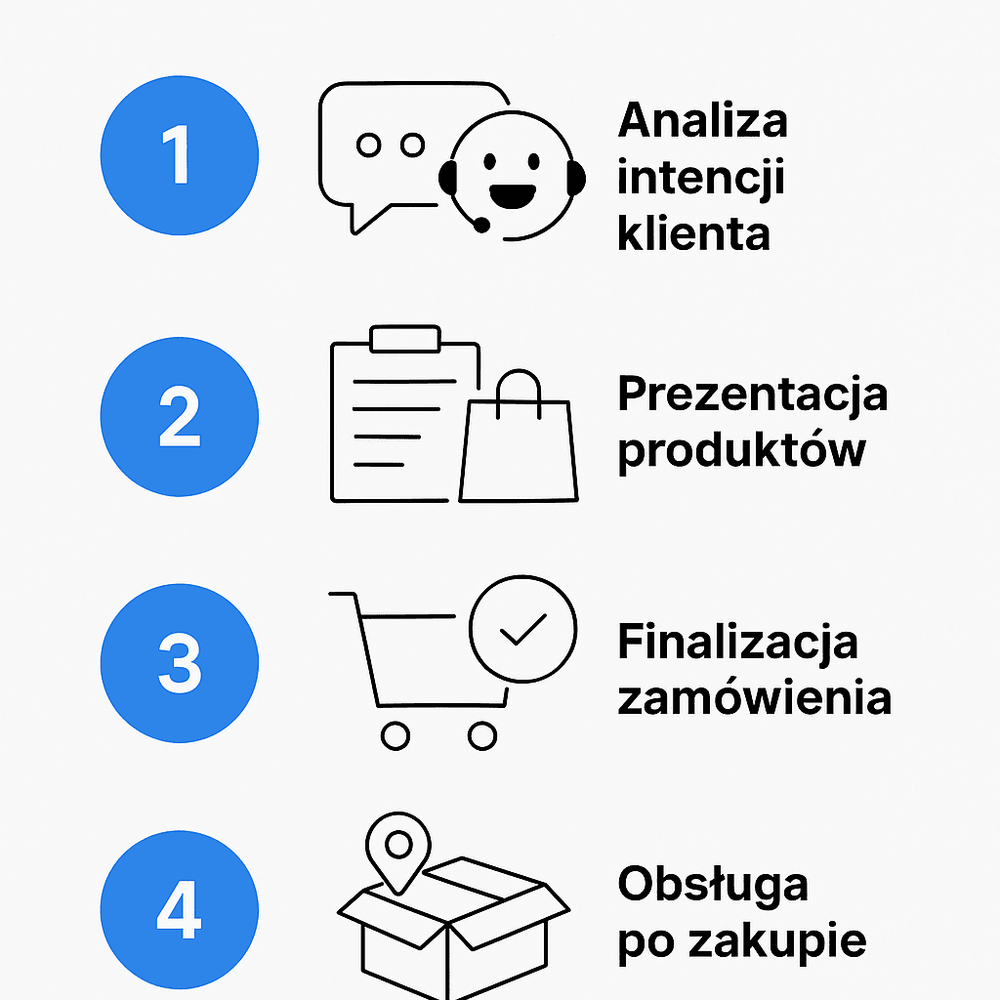
source: own elaboration
More and more online stores are using AI assistants that conduct live conversations with customers. This gives website visitors instant help—for example, 62% of consumers prefer using chat instead of waiting for a customer service agent to respond. These solutions use natural language processing (NLP) techniques and machine-learning models to analyze customer questions and provide clear, personalized answers. Below, we describe how such systems work, what the order-handling process looks like through chat, and what business benefits they deliver.
AI Chat Technologies and Integrations in E-commerce
Modern AI chats are intelligent assistants embedded in online stores or mobile apps. They can hold natural conversations thanks to NLP—for instance, they recognize customer intent and choose accurate responses. These systems integrate with the e-commerce platform and other company systems (product database, CRM, logistics, payments). In practice, the chatbot scans the store’s catalog (product feed or API), building its own knowledge base about the offer. This gives it access to up-to-date information on products, inventory levels, and orders.
When a customer starts a conversation (e.g., by asking about a product or shipment status), the bot quickly pulls the necessary data from integrated systems and returns a precise answer. A customer can ask questions like “Where is my package?” and the chatbot—connected to the logistics system—will provide exact delivery status. With payment integration, the chat can also initiate an order or finalize a transaction, handling both the “add to cart” action and checkout.
Order Handling Through an AI Chat
First contact and intent analysis. The customer clicks the chat icon on the store’s website and types a question or request. Using NLP, the chatbot analyzes the text and identifies the intent (e.g., “I’m looking for a specific model,” “how to check my order status”).
Generating a response and suggestions. The system selects an answer from its knowledge base: it may provide it immediately or suggest products related to the query. For example, on Gymshark’s website the chatbot asks what kind of issue the customer is experiencing, and when “How to track my order?” is selected, it displays the next steps. If the customer asks about a specific item, the bot searches the product database and displays the description with a purchase link.
Personalization and recommendations. Based on browsing history or past purchases, the bot can recommend additional items or promotions. If the customer shows interest in a product during the conversation, the chatbot can automatically add it to the virtual cart and suggest completing the order. This streamlines the shopping journey—the customer doesn’t need to navigate between pages.
Order finalization. After confirming the products, the chatbot connects with the store system to register the order. It may ask for additional details (address, payment) and pass them to the e-commerce platform or payment gateway. Once the payment is processed, the bot confirms the order by sending the order number or invoice. The entire process happens within a single chat window—from customer question to transaction registration.
Post-purchase support. After the order is placed, the chatbot continues to assist the customer: it provides order-status updates, tracks delivery, or helps with returns. Thanks to logistics integration, it answers shipping-related questions and delivery timelines. It may also request feedback or offer help with future purchases.
Business Benefits of AI Chats
Higher conversion and sales. Chatbots significantly simplify the shopping process—guiding users through the entire sales funnel in a single interface. Customers receive instant product answers, recommendations, and quick access to the cart. Statistics show that implementing an AI chat can even triple conversion rates. A Glassix study found that visitors on sites with a chatbot made 23% more purchases than those without one, and high-intent customers were five times more likely to buy. Real-time communication reduces abandoned carts by eliminating doubts and speeding up checkout.
Improved customer experience. Chatbots make customer service more personalized and friendly. Shoppers willingly use 24/7 support—88% say they are willing to pay more for excellent service. AI chat provides fast, contextual answers to every question, increasing satisfaction and loyalty. Personalization—such as recommendations based on purchase history—further boosts the likelihood of additional sales.
Round-the-clock availability. Chatbots don’t need breaks or vacations: 64% of users say 24/7 availability is the biggest advantage. Customers can ask questions outside the store’s working hours and still receive instant replies. This prevents lost sales due to unavailable agents. As many as 62% of consumers prefer using chat over waiting in line for a human agent, demonstrating that availability increases convenience and satisfaction.
Cost savings and reduced workload. Automating routine inquiries frees employees from repetitive tasks and lowers service costs. Research shows that chatbots can answer up to 79% of typical customer questions, reducing staffing expenses by up to 30%. Employees can then focus on complex issues requiring human judgment. As a result, companies maintain high service quality while optimizing operational costs.
Such natural conversation illustrates how an AI chat promptly and politely responds to customer messages. Users feel supported, receiving immediate help without waiting for an agent. Quick responses to simple queries improve the shopping experience—which in turn increases loyalty and store revenue.
Use Cases
Domino’s Pizza (food industry): The company has been using AI solutions for years. Customers can order pizza via voice (Alexa, Google) and chat. After implementing an NLP platform, 70% of orders are placed online through these tools, and voice orders increased by 160%. The company’s chatbot (“Dom”) lets customers quickly place orders, customize ingredients, and track delivery.
Gymshark (sportswear): The store uses a chatbot for customer support. After opening the chat, visitors see a friendly greeting, and the system asks, “How can we help?” As shown in Shopify’s example, when a customer selects “How to track my order?”, the bot guides them through the next steps. This helps Gymshark customers quickly access order information without contacting support.
Sephora (cosmetics): Sephora used a chatbot to run interactive quizzes collecting preference data from younger customers. Based on the answers, the system recommends products and directs users to the app for purchase. This helps Sephora personalize offers and increase sales while engaging customers in a fun way.
Louis Vuitton (luxury brand): The brand implemented an advanced NLP chatbot on its website, offering a service experience comparable to an in-store consultant. The bot can search products by type, size, or color and locate them in nearby stores. It also allows users to share products with friends for joint decision-making. This keeps service standards high even online, which is crucial in the premium segment.
Summary
Integrating AI chat into the shopping process is becoming increasingly common. In 2024–2025, the growth of large language models (LLMs) and generative tools is expanding chat capabilities—from more natural conversations to deeper contextual understanding of the customer. For online store owners and marketers, this means a chance to significantly increase sales and customer satisfaction without proportionally growing support teams. It’s worth considering such an implementation today, as the benefits of 24/7 automated service grow along with AI technology.