How to Prepare Your Business for Custom AI Agent Implementation: A Practical Guide
source: own elaboration
Introduction: The Era of Intelligent Automation in E-commerce
Implementing a custom AI Agent is no longer the domain of tech giants. Today, solutions like eSeller or AI Phone are becoming standard in modern online stores that want to scale sales without linearly increasing operational costs. However, implementation success depends not only on the technology itself but primarily on proper organizational preparation. In this guide, you will learn how to go through this process step by step to maximize the potential of artificial intelligence from TrafficWatchdog.
Step 1: Data Inventory and Organization
Artificial intelligence is only as good as the data it works on. Before launching tools like Ads Bot AI or eSeller, it is necessary to ensure the quality of the information base. An AI Agent must have access to an up-to-date and precise product feed. What does this mean in practice?
- Description accuracy: Ensure that product attributes (color, size, material) are structured.
- Inventory updates: AI cannot recommend products that are out of stock.
- Knowledge base (FAQ): Prepare a set of the most frequently asked questions by customers. The AI Agent will use them to provide precise answers 24/7.
Step 2: Defining User Paths and Agent Goals
Before you implement a Sales Bot, you need to know who it is supposed to "save." Effective implementation requires defining critical moments in the purchasing path. Should the AI activate when a user spends a lot of time on a product page without adding it to the cart? Or perhaps it should react to returning customers who still haven't made a purchase?
Similarly, in the case of AI Phone – determine whether it should primarily serve to inform about order status or perhaps actively support sales during night hours. Clearly defined goals will allow for better algorithm calibration and faster return on investment.
Step 3: Integration with the Technological Ecosystem
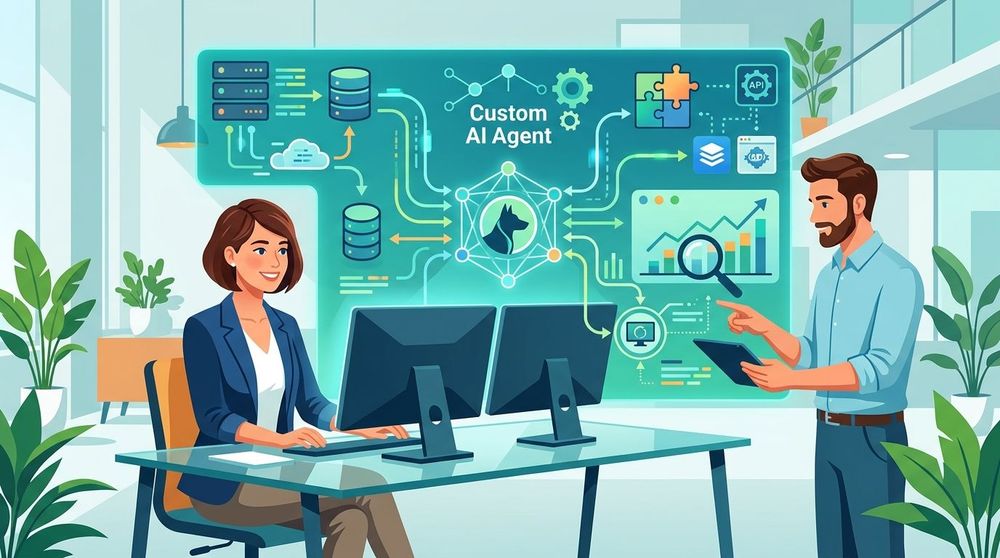
A custom AI Agent does not operate in a vacuum. It must be integrated with your e-commerce engine, CRM system, or advertising platforms. In the case of Ads Bot AI, integration allows for automatic optimization of Performance Max campaigns in real-time, improving titles and graphics based on current search trends.
It is also worth remembering the security aspect. The effectiveness of any AI Agent depends on whether it interacts with real people. Therefore, the foundation should be a tool like Click Scanner, which eliminates bot traffic and unfair competition. This ensures your AI budget is spent on interactions with potential customers, not click farms.
Step 4: Preparing the Team for AI Collaboration
Implementing artificial intelligence is a cultural change. Customer service employees should view the eSeller not as a threat, but as support that takes over repetitive, boring inquiries. This allows the team to focus on building relationships in the most complex cases. Training the team in monitoring AI performance and drawing conclusions from system-generated reports is crucial for continuous process improvement.
Step 5: Testing and Optimization (Feedback Loop)
Implementing a custom AI Agent is a continuous process. After launching tools like the Affiliate Scanner or AI Phone, data should be regularly analyzed. Do customers end conversations with the bot satisfied? Do the discount codes proposed by the Sales Bot actually close sales? Modern TrafficWatchdog tools allow for ongoing strategy adjustments, which in the long run leads to significant improvement in conversion rates and customer acquisition cost optimization.
Summary
Preparing a company for custom AI Agent implementation requires a strategic approach to data, processes, and people. By choosing comprehensive solutions from TrafficWatchdog, you gain not only advanced technology but also tools that protect your business from abuse. Remember that AI is an investment that pays off fastest where the ground is solidly prepared.