Fake Leads in E-commerce: How AI Detects Bots and Ghost Orders
source: own elaboration
The Digital Plague of E-commerce - What Are Fake Leads?
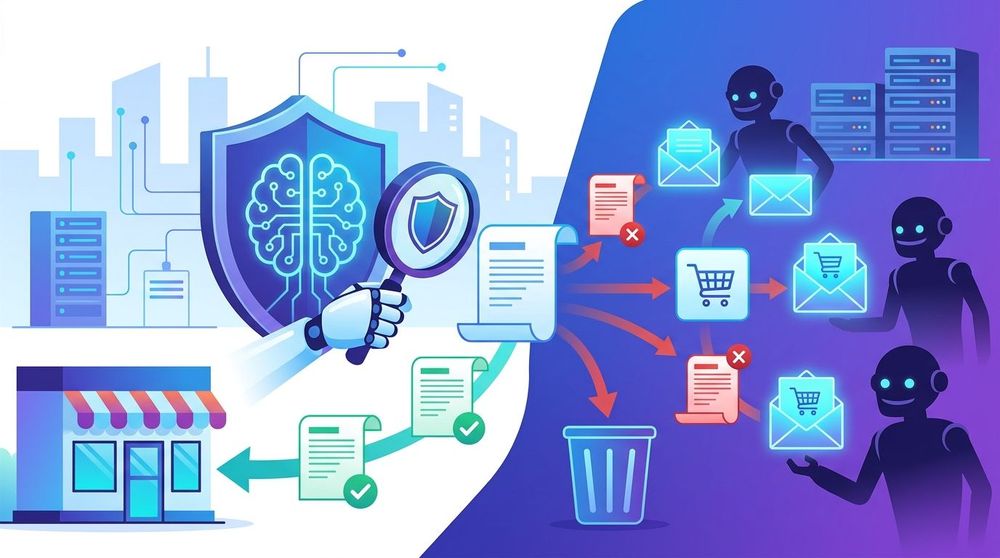
In the era of rapid e-commerce growth, online store owners face increasingly sophisticated threats. One of the most painful problems is fake leads and ghost orders generated by automated bots. These are no longer simple scripts, but advanced AI algorithms capable of mimicking human behavior, filling out forms, and even completing the checkout process with no intention of paying.
This phenomenon directly hits business profitability. Fake orders (especially cash-on-delivery ones) generate real operational costs: from packing goods and logistics to handling returns. Furthermore, in affiliate marketing, fraudsters use bots to extort commissions for conversions that will never generate profit for the store.
Affiliate Scanner: Your First Line of Defense Against Fraud
To effectively combat this practice, TrafficWatchdog has developed the Affiliate Scanner. This specialized tool monitors traffic in affiliate programs for dishonest practices. AI analyzes every click and conversion attempt, identifying techniques such as:
- Cookie Stuffing: Dropping multiple tracking cookies onto a user without their knowledge to unfairly claim commission for a purchase that would have happened anyway.
- Click Hijacking: Intercepting clicks and redirecting them through hidden affiliate links.
- Fake Leads: Mass generation of registrations and orders by bots using fictitious or stolen data.
Thanks to the Affiliate Scanner, marketers can immediately cut off dishonest partners, protecting the advertising budget from paying out unearned commissions.
How Does AI Distinguish a Human from a Machine?
Modern bots can rotate IP addresses, use proxies, and mimic mouse movements. Traditional blocking methods based on IP blacklists are becoming insufficient. AI in TrafficWatchdog tools uses real-time behavioral analysis. The system verifies hundreds of parameters, such as form-filling speed, unusual site navigation patterns, or inconsistencies in device parameters (the so-called "virtual fingerprint").
If the system detects that an order comes from a bot, it is marked as suspicious even before being processed. This allows for avoiding logistical losses and maintaining clean sales analytics.
Why Are Ghost Orders More Than Just a Statistical Error?
The consequences of ignoring fake traffic are multi-layered. Firstly, a significant portion of the marketing budget can be "burned" on interactions that have no chance of converting. Secondly, distorted data in Google Analytics or advertising panels leads to poor business decisions. Marketers may get the false impression that a campaign is effective when it is only generating "empty" traffic.
Protection against bots also means taking care of ROAS (Return on Ad Spend). By eliminating artificial clicks using the Click Scanner and blocking fake orders through the Affiliate Scanner, the store invests only in real sales potential.
TrafficWatchdog Tool Synergy: From Protection to Conversion
The fight against bots is only one side of the coin. Equally important is what happens with real users. Once AI filters out machine traffic, optimization tools come into play:
- Sales Bot: Identifies hesitant customers (humans!) who visit the store multiple times and activates a personalized chat with a discount before they leave for the competition.
- e-Seller: A 24/7 AI assistant that answers product questions and helps close sales, increasing conversion from conversations to orders.
- Ads Bot AI: Automatically optimizes Performance Max campaigns to attract high-value traffic at a lower cost per click (CPC).
Summary: Is Your Store Ready for Future Challenges?
In a world where automated traffic accounts for an increasing percentage of overall web activity, a passive stance is risky. Using artificial intelligence to detect bots is no longer a luxury but a necessity for any profitable e-commerce business. Thanks to solutions like the Affiliate Scanner from TrafficWatchdog, companies can regain control over their budgets, clean up analytical data, and focus on what matters most - building relationships with real customers.