Product Campaigns on Autopilot: 7 Google Ads Tasks Taken Over by AI Agents
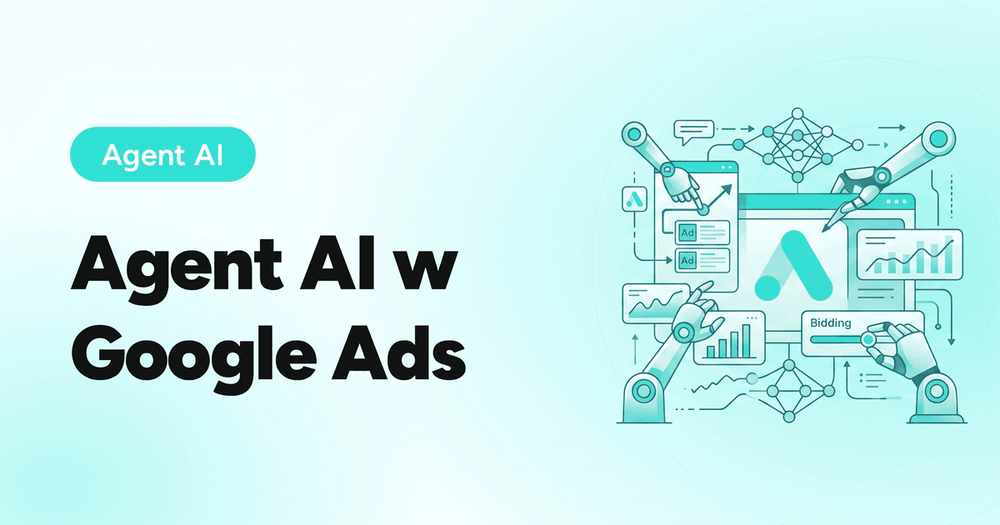
source: own elaboration
Scaling e-commerce and running effective search engine advertising campaigns currently involves serious operational and budgetary challenges. Cost per click (CPC) in Google Ads is rising quarter after quarter, making traditional ad account management far too complex to rely on manual and time-consuming processes. At the same time, many businesses feel completely dependent on paid traffic—where simply reducing the advertising budget immediately cuts off the flow of new customers.
According to data in the McKinsey report "State of Marketing Europe 2026", as many as 94% of European marketing and sales organizations assess their competencies in operationalizing artificial intelligence as low or moderate. Only 6% of leaders competing in EU markets have reached a high level of operational maturity in AI usage, recording an average 22% increase in operational efficiency. Furthermore, an analysis by Zigment AI on 2026 AI statistics shows that advanced deployments of artificial intelligence agents in European environments yield up to a 300% return on investment (ROI) within the first six months of operation.
The answer to rising bids and competitive pressure is the concept of an autonomous AI Ad Agent. It is an integrated system that takes over the key and most tedious tasks related to product ads in Google Shopping and the optimization of the e-commerce ecosystem.
Key Fact: Advanced AI Agent solutions allow e-commerce businesses to boost conversion rates by an average of 40% and increase average order value (AOV) by 35% through continuous product data optimization and alignment with purchase intent. — Source
What Is an AI Ad Agent and How Does the Ecosystem Work?
An AI Ad Agent in TrafficWatchdog's approach is a holistic system for increasing visibility that combines paid marketing channels, organic traffic, and expansion beyond standard e-commerce boundaries. Instead of limiting itself strictly to automated bid adjustments in the ad panel, the system operates on three key pillars:
- Trafishop / CSS + Ads Bot AI (Paid Channel): A combination of an official Google CSS (Comparison Shopping Service) partner platform with advanced product feed optimization.
- Blog Agent AI (Organic Channel): Creation and publication of search-optimized SEO articles on the store blog, driving long-term unpaid traffic.
- Lead Agent AI (Outbound B2B): A tool that actively acquires B2B partners and wholesale buyers on a performance-based pricing model.
Through this approach, the online store not only drastically reduces its customer acquisition cost (CAC) in Google Shopping, but also reduces reliance on rising ad rates by building a stable organic foundation.
7 Google Ads Tasks Taken Over by an AI Agent
1. Structural Reduction of Click Costs (CSS Mechanism)
Standard Google Shopping product campaigns launched directly through the default Google panel carry a hidden service margin charged by Google. Leveraging Trafishop's CSS (Comparison Shopping Service) eliminates this fee. Switching to a price comparison partner program makes the baseline bid in the auction structurally lower—the exact same product ads reach the exact same audience, but the cost per click drops by an average of 20% right from the start.
2. Advanced Product Feed Optimization
The quality of the product data file (XML/GMC) is the foundation of Quality Score in Performance Max and Google Shopping campaigns. Ads Bot AI automatically analyzes thousands of products in the store database, adjusting their descriptions, titles, and attributes to match actual customer search queries. A higher Quality Score enables Google to award better ad positions at a lower CPC cost, generating an additional ~15% in savings.
3. Autonomous Error Correction and Disapproval Prevention in Merchant Center
Product disapprovals in Google Merchant Center due to missing attributes, incorrect categorization, or invalid descriptions are a common headache for e-commerce stores. The AI Agent continuously scans the product catalog (handling catalogs ranging from 10,000 to over 50,000 products), populating missing values and eliminating formatting errors without requiring manual labor from the IT team.
4. Running Performance Max Campaigns and Budget Management
Deploying AI algorithms to manage campaigns directly allows for real-time bid adjustments based on conversion rates and profitability across individual product categories. As part of system expansion, the AI Ad Agent takes over Google Ads management in a transparent manner aligned with company business targets (ROAS/COS).
5. Generating Engaging Ad Creatives and Headlines
Modern e-commerce ad formats require constant rotation of messaging, headlines, and text and visual components. The AI Agent generates personalized headlines and ad copy tailored to current search trends, eliminating ad fatigue.
6. Building Alternative Organic Traffic (Synergy with Blog Agent AI)
Paid advertising only works as long as you pay. The AI Agent mitigates this risk through the ongoing deployment of the Blog Agent AI module. The system automatically creates and publishes 10 to 30 optimized industry and guide articles each month, driving users directly from search engines to product pages. As a result, the store gradually reduces the share of paid traffic in overall sales volume.
7. Automating Wholesale B2B Customer Acquisition (Lead Agent AI)
The B2B e-commerce sector requires reaching commercial partners outside search engines. The expanded configuration of the AI Agent automatically identifies potential target companies, personalizes email outreach, and establishes business relationships—with billing occurring strictly for companies that respond with genuine interest.
Key Fact: According to Boundless HQ's breakdown on the EU AI Act, automated marketing systems are classified as limited-risk solutions, requiring businesses to maintain transparency and ensure full compliance of customer data operations with European GDPR standards.
Comparison: Traditional Google Ads Management vs. AI Ad Agent
See how traditional product advertising compares to deploying an autonomous technological agent:
| Operational Area | Traditional Management / Agency | AI Ad Agent (TrafficWatchdog) |
|---|---|---|
| Baseline Cost per Click (CPC) | Standard Google Shopping auction rate with no discounts. | An average of 20% cheaper clicks thanks to Trafishop CSS service. |
| Product Data File (Feed) Optimization | Manual or superficial; infrequent title and description updates. | Continuous AI optimization of titles, descriptions, and attributes, lowering CPC by an additional ~15%. |
| Ad Budget Dependency | 100%—cutting budget results in an immediate loss of traffic and sales. | Gradual independence through the built-in Blog Agent AI module (SEO articles). |
| B2B Lead Generation | Separate sales department or expensive, low-precision display campaigns. | Lead Agent AI module billed on a pay-per-lead model for interested companies. |
| Pricing Model | High retainer fee + % of ad spend regardless of feed performance. | Clear subscription plans (from PLN 400/month) with transparent module breakdown. |
European Perspective and Legal Transparency (GDPR / EU AI Act)
Implementing autonomous artificial intelligence agents in e-commerce stores operating across the European Union (Germany, France, Poland, Central European countries) involves strict legal requirements. According to Technova Partners' report on data security in AI, the deployment of automation tools must adhere to privacy-by-design principles and remain fully compliant with GDPR regulations.
The AI Ad Agent by TrafficWatchdog operates at the infrastructure level for product data and analytics without infringing on user privacy, ensuring complete operational transparency under the provisions of the EU AI Act.
Frequently Asked Questions (FAQ)
Do I need to replace my current marketing agency to implement an AI Ad Agent?
No. The Trafishop CSS campaign and product feed optimization by Ads Bot AI can run fully in parallel with your agency's existing campaigns.
- No disruption to agency settings: Ads Bot operates at the product data level (feed quality) rather than changing Google Ads account settings directly.
- Easy performance comparison: The CSS service creates an independent channel, allowing you to directly compare click costs and performance against existing efforts.
What is the pricing structure of the AI Ad Agent?
The system is tailored to business scale and offers three transparent plans:
- Starter Plan (PLN 400/mo): Includes feed optimization for up to 10,000 products, full access to CSS discounts, and optional ad management (+8% of ad spend, min. PLN 800).
- Growth Plan (PLN 1,100/mo): Feed up to 25,000 products, CSS, ad management, and built-in Blog Agent AI (10 SEO articles per month included).
- Pro Plan (PLN 1,900/mo): Feed up to 50,000 products, CSS, ad management, Blog Agent AI, and integration with Lead Agent AI (+PLN 60 per acquired B2B lead).
How quickly can I expect to see initial results from the system?
Savings from the CSS mechanism are visible immediately upon activation (lower auction CPC rates). Product feed quality optimization delivers measurable improvements to Google Ads Quality Score within the first few weeks following deployment.
Key Performance Indicators
| Metric | Before Implementation | After Implementation | Source |
|---|---|---|---|
| Cost per Click (CPC) in Google Shopping | 100% of standard market rate | Up to 20% lower cost per click for the same ad position | Trafishop / CSS Documentation |
| Conversion Rate (CR) | Baseline store rate | Average increase of 40% | Zigment AI 2026 Report |
| Average Order Value (AOV) | Baseline store rate | Average increase of 35% | Zigment AI 2026 Report |
| Return on Investment (ROI) in 6 months | Standard return from traditional campaigns | Up to 300% ROI | Zigment AI 2026 Report |
| Marketing Operational Efficiency | Low or moderate AI maturity (94% of companies) | Efficiency increase of 22% | McKinsey "State of Marketing Europe 2026" |
Summary
Autonomous optimization of product campaigns is not just a trend, but a vital step toward maintaining profitability for online stores across European markets. Handing advertising tasks over to an AI Agent delivers a range of tangible benefits:
- Immediate click cost reduction: The Trafishop CSS program slashes baseline CPC bidding rates by approximately 20%.
- Long-term Quality Score enhancement: Ads Bot AI automatically fixes Merchant Center errors and optimizes product attributes.
- Traffic source diversification: The integrated Blog Agent AI builds free organic traffic from Google and AI Search, easing pressure on paid budgets.
- B2B scaling: The Lead Agent AI module acquires commercial partners without financial risk on a pay-per-lead basis.
Want to stop overpaying for clicks in Google Shopping and build a lasting competitive advantage? Explore the capabilities of the AI Ad Agent on TrafficWatchdog.pl and schedule a free consultation for your store.