Custom AI Agents: Identifying Business Processes Ready for Automation
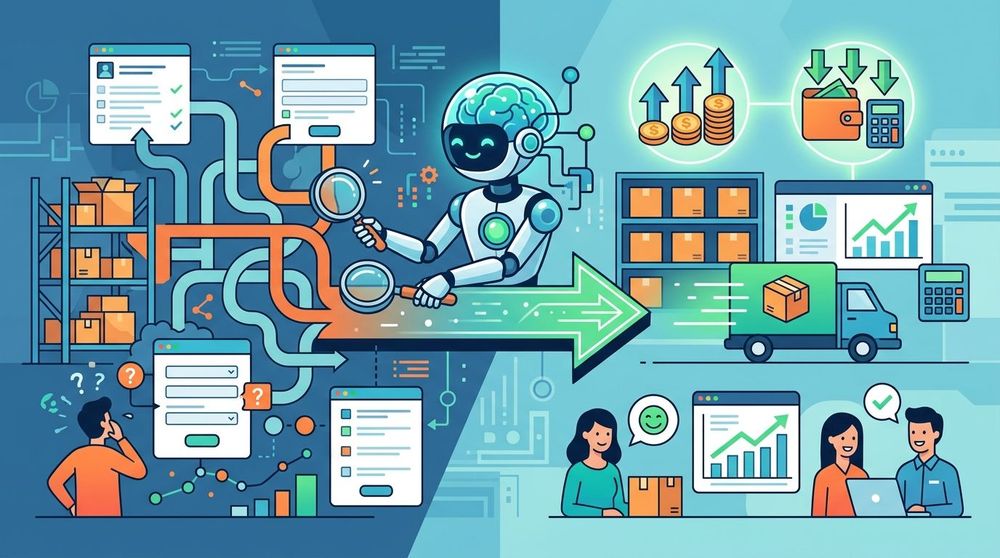
source: own elaboration
Introduction: The Era of Intelligent Agents in E-commerce
Business process automation is no longer the exclusive domain of large corporations. Thanks to the development of AI technology, small and medium-sized e-commerce companies can now implement solutions that seemed like a futuristic vision just a few years ago. Custom AI agents can take over tasks that previously consumed hundreds of human work hours, while eliminating errors caused by fatigue or oversight. The key challenge for an e-commerce manager is no longer asking "is it worth it?" but rather "where do we start?"
Criterion 1: Repetitiveness and High Volume of Inquiries
The first and most obvious area ready for automation is customer service. If your team answers the same questions about order status, shipping costs, or product availability every day, it's a sign that you need AI support. Solutions like eSeller from TrafficWatchdog analyze product feeds and conversation history, allowing them to not only provide precise answers 24/7 but also recommend specific products and offer discount codes, effectively closing sales without human intervention.
Criterion 2: Data Complexity and Real-Time Optimization
Processes based on the analysis of massive datasets are ideal candidates for automation. Managing Performance Max campaigns or optimizing product feeds in Google Ads are tasks where human perception is surpassed by algorithms. Tools like Ads Bot AI can analyze the performance of thousands of product attributes in a fraction of a second, improve their titles and descriptions, and even generate new graphic assets. Automation in this area allows for lower cost-per-click (CPC) while simultaneously increasing return on ad spend (ROAS).
Criterion 3: Identifying and Rescuing "Abandoned" Opportunities
Many processes in an e-commerce company involve so-called "silent losses"—situations where a customer visits the store, shows interest, but leaves without a purchase. Manually monitoring every user's behavior is impossible. This is where Sales Bot comes in. It identifies returning users, profiles them based on pricing preferences, and activates a personalized chat at the moment when the risk of losing them to a competitor is highest. If your store has a high number of sessions that do not end in conversion, this is a process that requires immediate AI agent implementation.
Criterion 4: Communication Barriers and Phone Availability
Many companies lose customers because they cannot answer the phone after office hours or during peak sales periods. If call analysis shows a high percentage of missed calls, the solution is an AI Phone. This is a virtual consultant that conducts natural voice conversations, answers questions, and assists in the purchasing process. Once automated, this process runs continuously, eliminating bottlenecks in customer communication.
How to Conduct an AI Process Audit?
To effectively identify processes for automation, it is worth following this framework:
- Time Analysis: List the tasks that take up the most of your team's time on a weekly basis.
- Human Error Verification: Identify areas where mistakes occur most frequently (e.g., incorrect descriptions in campaigns, overlooked leads).
- Customer Satisfaction Research: Check what customers complain about most often (e.g., long response times).
- Scalability: Consider which process would become impossible to handle with the current team if orders were to double.
Summary: From Identification to Implementation
Custom AI agents do not replace strategy; they become its most effective executors. Identifying processes ready for automation is the first step toward building a competitive advantage. By choosing tools from TrafficWatchdog, such as Ads Bot AI, eSeller, or Sales Bot, you can be sure that technology is working for your financial bottom line, allowing you to focus on growing your business vision.