Margin-Driven Google Ads Optimization: How AI Agents Drive Profitable Campaigns
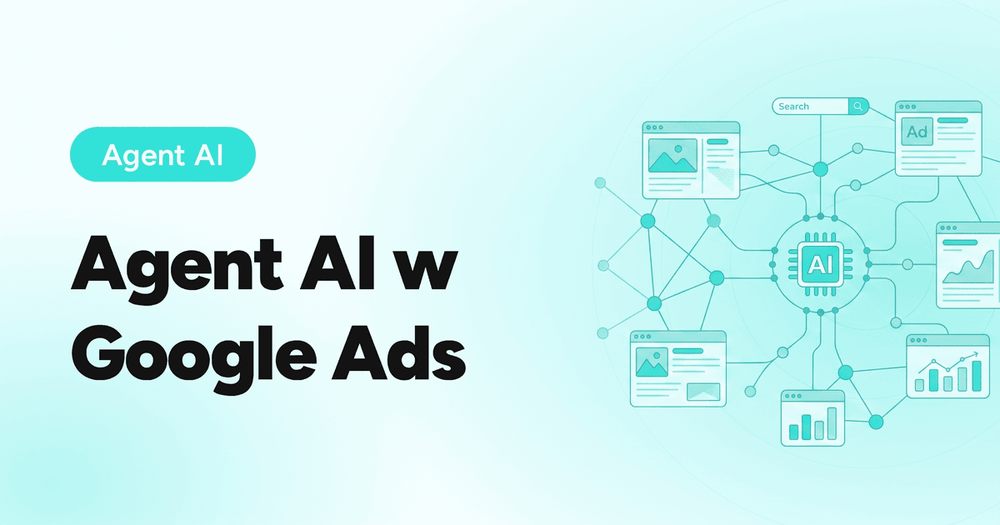
source: own elaboration
Most e-commerce stores and retail enterprises across Europe face the same recurring dilemma: steadily rising cost-per-click (CPC) rates in Google Ads and diminishing Return on Ad Spend (ROAS). In an era of aggressive bidding competition and auction automation, the traditional approach to managing Performance Max and Google Shopping campaigns—focused solely on top-line revenue volume—is no longer sufficient. When advertising algorithms optimize bids for gross revenue rather than net margin, businesses regularly overpay for traffic on low-margin products, eroding their bottom line.
The strategic solution to this barrier lies in transitioning toward dedicated, autonomous traffic management technology. Advertising AI Agent by TrafficWatchdog is an end-to-end ecosystem combining structural bid cost reduction in Google Shopping, operational product data engineering, and parallel customer acquisition across organic and outbound channels.
Key takeaway: According to market forecasts published by Paul Okhrem, the global market for autonomous AI agents will exceed $12 billion by 2026, with over 40% of enterprise software applications embedding agentic workflows capable of autonomous operational decision-making.
1. Modern E-Commerce Challenges: Why Traditional Google Ads Lose Profitability
Rapid shifts across Google's advertising ecosystem require marketers and business owners to fundamentally rethink their campaign management methods. As highlighted in Kliq Interactive's analysis of Google Ads automation, traditional manual keyword bidding has been almost completely replaced by Smart Bidding algorithms and AI Max formats. However, this shift introduces several major pitfalls:
- Optimizing for revenue instead of margin: Standard Google models focus on generating conversions and gross basket value. As a result, ad budgets are often directed toward high-turnover products that yield minimal unit profit margins.
- Hidden markups on Google Shopping traffic: Merchants managing campaigns directly through standard Google Shopping interfaces pay an embedded margin markup on every single auction bid.
- Poor product feed quality: Subpar product titles, missing essential attributes, and vague descriptions decrease product Quality Scores, forcing automated bidding algorithms to bid higher CPC rates to compete.
- Over-reliance on a single traffic source: Many businesses depend entirely on paid ads. When budgets are cut or bidding spikes occur, inbound traffic drops to zero due to the lack of an organic acquisition foundation.
According to market data by Incremys, an external AI orchestration layer represents the only sustainable way to force advertising platforms to allocate budgets based on actual business KPIs, such as customer lifetime value (LTV) and net unit profit.
2. What Is Advertising AI Agent and How Does It Work?
Advertising AI Agent is an integrated system that eliminates organizational silos between digital marketing channels. Rather than managing ad spend, SEO efforts, and B2B prospecting independently, the platform synchronizes four interconnected modules:
- Trafishop / CSS: A certified Comparison Shopping Service platform delivering direct, structural bid reductions on Google Shopping auctions by an average of 20% compared to standard campaigns.
- Ads Bot AI: An input-data optimization engine that dynamically refines product feeds (titles, descriptions, categorizations, and attributes) and ad creatives in real time, cutting CPC rates by an additional ~15%.
- Blog Agent AI: An autonomous content engine generating comprehensive, product-aligned SEO articles monthly, securing consistent organic inbound traffic across Google Search and modern AI Search engines.
- Lead Agent AI: A dedicated outbound engine designed for B2B segments, executing personalized cold email workflows on a strict pay-per-lead pricing model.
Context Engineering Over Generic Prompts
The fundamental advantage of Advertising AI Agent lies in context engineering. As noted in Vorma's architectural research on agentic systems, applying generative AI directly to disorganized product data merely automates chaos. Ads Bot AI first enhances product feed data with missing market attributes and real-time competitor signals before syncing with Google's bidding systems. This enables auction algorithms to match products with high-intent search queries that yield maximum profitability.
3. The Dual Cost-Reduction Engine: Synergizing Trafishop CSS and Ads Bot AI
Pairing a certified CSS platform with continuous product feed optimization creates a compounding cost-efficiency curve. In practice, this delivers a combined 30–35% reduction in CPC across Google Shopping campaigns.
- Structural leverage (Trafishop CSS): Following the European Commission antitrust ruling, auctions routed through independent Comparison Shopping Services (CSS) bypass the standard margin commission charged by Google Shopping. This provides an instant 20% bidding advantage on every auction entry.
- Operational leverage (Ads Bot AI): Continuous feed enrichment improves Google Merchant Center quality ratings. Superior query-to-product relevance allows accounts to win top placements at lower baseline bids, reducing CPC by an additional 15%.
Key takeaway: As demonstrated in The Smarketers B2B marketing case study, deploying autonomous AI agents that react dynamically to purchase intent signals and reallocate ad spend in real time can drive returns exceeding a 116% ROI.
4. Comparison: Traditional Google Shopping Management vs. Advertising AI Agent
The following table illustrates the operational and financial differences between standard campaign management models and TrafficWatchdog's multi-agent deployment:
| Operational Scope | Traditional Agency / Standard Model | Advertising AI Agent (TrafficWatchdog) |
|---|---|---|
| Cost-per-Click (CPC) | Standard Google Shopping rates with built-in margin | 30-35% lower (CSS -20% + Ads Bot ~15% synergy) |
| Product Feed Optimization | Manual, periodic reviews or untouched data | Continuous, automated AI attribute enrichment |
| Traffic Diversification | 100% reliant on paid advertising budgets | Organic SEO traffic (Blog Agent AI) and B2B pipelines (Lead Agent AI) |
| Transparency & Control | Risk of losing historical campaign data on agency switch | 100% client ownership; parallel deployment capabilities |
| Commercial Model | High fixed monthly retainer fees | Transparent subscription tiers with CPS or performance options |
5. The Holistic Growth Funnel: Combining Paid Traffic, SEO, and B2B Outbound
Isolated paid campaigns deliver immediate revenue but fail to compound long-term digital asset value. Advertising AI Agent addresses this vulnerability through coordinated multi-channel integration.
The Growth Flywheel: Paid Campaigns & Blog Agent AI
Paid Google Shopping ads via CSS generate steady turnover from day one. Simultaneously, Blog Agent AI produces 10 to 30 long-form SEO articles each month. These pieces—engineered around transactional search queries, buying guides, and comparative product reviews—link directly to matching inventory pages. Over time, free organic traffic grows as a percentage of total revenue, bringing down overall Customer Acquisition Cost (CAC) and insulating the business against bidding volatility.
Wholesale & Commercial Expansion: Lead Agent AI
For companies operating wholesale, distribution, or B2B manufacturing arms, Lead Agent AI conducts hyper-targeted outbound email outreach. Operating on a strictly vetted pay-per-lead basis, you only pay for qualified prospective clients who express genuine interest in receiving commercial offers. This frees sales teams from cold prospecting routines to focus exclusively on closing sales.
6. Regulatory Compliance: EU AI Act and Data Protection Standards
Deploying AI-driven commercial tools across the European Union requires rigorous compliance standards. As noted in Davies Meyer's legal analysis of the EU AI Act, EU Regulation 2024/1689 imposes strict transparency and governance mandates on marketing systems and AI software providers.
According to Clear AI Register's documentation on regulatory penalties, non-compliance can trigger financial sanctions of up to €35 million or 7% of global annual turnover. TrafficWatchdog's Advertising AI Agent addresses compliance through key safeguards:
- Limited Risk classification: Product feed optimization and ad generation operate within transparent, auditable business boundaries.
- GDPR compliance: Outreach and data processing modules interact exclusively with verified public B2B corporate information, upholding full rights to object and automated profiling transparency.
- Human-in-the-loop oversight: Business owners retain direct administrative control over optimization guidelines, message templates, and budget limits.
7. Frequently Asked Questions (FAQ)
Does deploying Advertising AI Agent require terminating our current agency contract?
No. Trafishop CSS campaigns can operate entirely independently alongside existing marketing setups as a parallel acquisition channel.
- Zero interference with agency configurations: Ads Bot AI optimizes data at the Google Merchant Center product feed level without modifying your agency's campaign structures.
- Direct A/B performance benchmarking: Businesses can benchmark CSS traffic cost efficiency directly against legacy campaign results in real time.
- Full control: You retain full ownership and visibility over your ad account and conversion data.
What pricing tiers are available for TrafficWatchdog's Advertising AI Agent?
Advertising AI Agent offers three scalable plans tailored to your inventory volume:
- Starter (400 PLN/mo): Includes product feed optimization for up to 10,000 SKUs, full Trafishop CSS access, and optional Google Ads campaign management (+8% ad spend, min. 800 PLN).
- Growth (1,100 PLN/mo): Expands coverage up to 25,000 SKUs, including CSS access, campaign management, and the Blog Agent AI module delivering 10 SEO articles per month.
- Pro (1,900 PLN/mo): Engineered for catalogs up to 50,000 SKUs, including CSS, campaign management, Blog Agent AI (10 SEO articles/mo), Lead Agent AI integration (+60 PLN per verified B2B lead), and dedicated IT support.
How quickly will we see tangible performance improvements?
Performance gains scale across distinct phases depending on the deployed module:
- CSS bidding savings: Google Shopping CPC reductions take effect immediately once your feed routes through the certified Trafishop partner platform.
- Feed quality optimization via Ads Bot AI: Higher product quality scores and refined search query matching materialize within the first several weeks of algorithmic processing.
- Organic SEO traffic (Blog Agent AI): Newly indexed articles generally rank within several weeks, establishing compounding organic search traffic over a 3- to 6-month period.
Extended Product & Operations FAQ
What is the Advertising AI Agent ecosystem, and must we implement all modules at once?
Advertising AI Agent is a modular infrastructure combining three growth channels: paid acquisition (Trafishop/CSS + Ads Bot AI), organic search visibility (Blog Agent AI), and outbound B2B prospecting (Lead Agent AI). You do not need to implement every module at once. Many brands launch with Trafishop CSS to secure immediate Google Ads bid reductions, layering on automated SEO or lead generation as operations scale.
How do Trafishop CSS and Ads Bot AI lower Google Shopping campaign costs?
Trafishop operates as an EU-certified Google CSS partner. Operating through an authorized CSS eliminates the built-in auction margin charged by Google, delivering up to a 20% bidding efficiency advantage on identical budgets. Ads Bot AI continuously audits and refines the product feed, matching descriptions, titles, and categories to commercial search queries with the highest conversion profitability.
What does technical onboarding look like, and does it require developer resources?
Onboarding is non-invasive and requires no alterations to your e-commerce source code or internal IT resources. Routing through Trafishop CSS and configuring Ads Bot AI occurs entirely at the Google Merchant Center level. Blog Agent AI integrates with standard CMS platforms (such as WordPress, Shopify, or custom architectures) via secure API tokens, while Lead Agent AI operates over dedicated outbound email domain infrastructure.
Are AI-generated content and outbound outreach compliant with brand safety and GDPR regulations?
Yes. All modules operate within pre-configured tone-of-voice, branding, and compliance parameters. Blog Agent AI writes thorough, search-compliant content aligned with Google helpful content standards, while Lead Agent AI contacts verified B2B corporate recipients strictly adhering to GDPR and enterprise outreach guidelines.
How does Blog Agent AI differ from generic generative writing tools?
Blog Agent AI is an autonomous, always-on agent that monitors search query trends, conducts competitor content gap analyses, identifies high-value keyword targets, and formats articles for standard search engines as well as generative AI Search platforms (such as Google Gemini and SearchGPT). This removes the need for manual brief writing and agency oversight.
When should we expect initial results across each active module?
Results vary by channel. CPC savings across Google Shopping auctions appear immediately upon Merchant Center migration to Trafishop CSS. Lead Agent AI generates its first qualified B2B prospect interactions within weeks of initial outreach, while Blog Agent AI establishes a compounding stream of organic visits over medium- to long-term indexing cycles.
Summary
Optimizing Google Shopping campaigns for net margin requires shifting from reactive, manual adjustments to unified agentic technology. TrafficWatchdog's Advertising AI Agent empowers online businesses to scale customer acquisition without burning budgets on low-margin inventory.
- Structural CPC reduction: Certified Trafishop CSS cuts bidding costs by 20%, while Ads Bot AI feed engineering adds an additional ~15% in CPC savings.
- Margin protection: Optimizing product data around intent and net profitability directs your ad spend to items delivering genuine bottom-line value.
- Multi-channel resilience: Combining Google Shopping with Blog Agent AI organic indexing and Lead Agent AI outbound outreach builds a self-sustaining acquisition funnel.
- Low barrier to entry: Run alongside existing agency contracts with zero lock-in, zero code changes, and flexible commercial terms.
Contact the TrafficWatchdog team today to claim a complimentary product feed audit and calculate your potential Google Ads campaign savings.